Fake Invoices, Real Trouble: The GST Trap Businesses Cannot Afford to Ignore


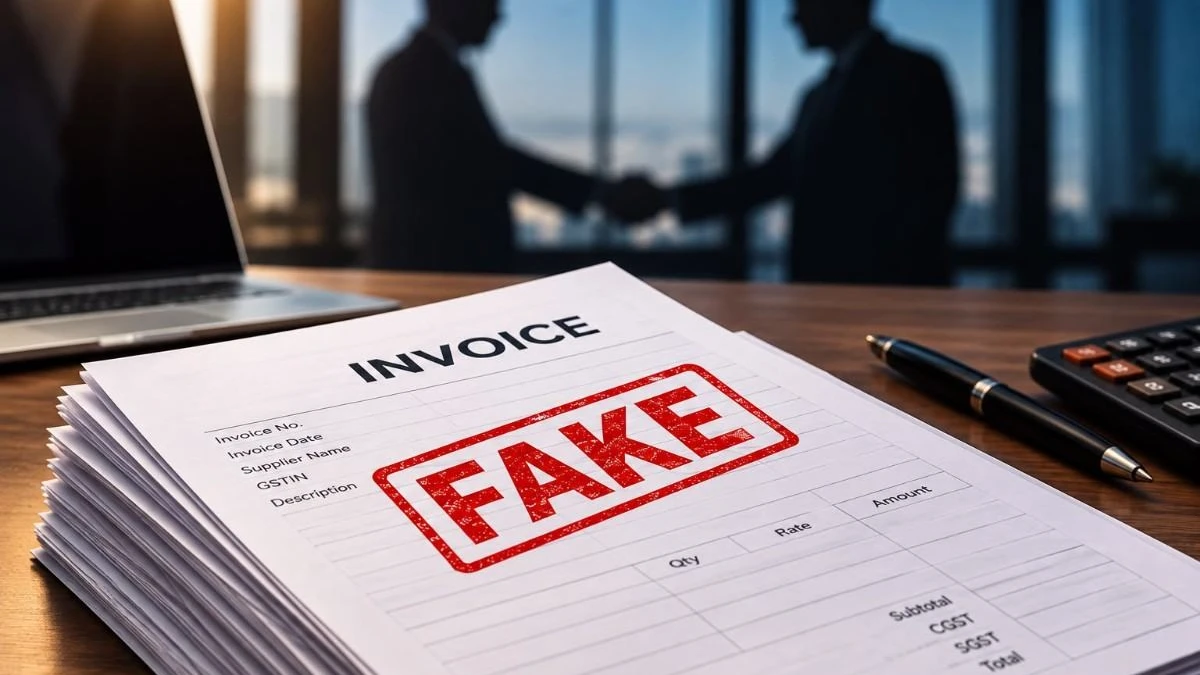

Mumbai: An invoice can look perfectly legitimate. It may carry a valid GST number, contain all the required details and even appear in the GST system. But if there is no genuine transaction behind it, that invoice can eventually become a serious liability for the business claiming it.
Fake invoice networks continue to be a concern under the GST regime. In many cases, invoices are generated without any actual supply of goods or services and are then used to pass on or claim Input Tax Credit (ITC).
The concern is not limited to businesses deliberately participating in such arrangements. A genuine business can also find itself facing questions if one of its suppliers is subsequently found to be involved in fraudulent transactions.
Irfan Khatri, Founder of HalfPace Finance and Tax Consultants and a prominent voice in the taxation and financial compliance space, believes businesses need to look beyond the invoice itself.
“An invoice is evidence of a transaction, but it is not the transaction itself. If goods have actually been purchased, there should be a trail behind that invoice. If it is a service, there should be some evidence that the service was actually delivered.”
A GST number is not a guarantee
One of the common misconceptions among taxpayers is that an active GST registration automatically makes a transaction safe.
It does not.
Verifying a supplier’s GST registration is an important first step, but businesses should also consider whether the supplier is genuinely engaged in the business being offered and whether the transaction makes commercial sense.
The warning signs can be particularly obvious when someone offers to provide an invoice without an actual supply, arrange ITC for a commission, or offers a transaction at terms that appear too good to be true.
“If someone is offering you an invoice in exchange for a percentage of the amount, without any actual supply, that should not be seen as a tax-saving opportunity. It is a compliance risk, and businesses should stay away from such arrangements,” says Khatri.
The transaction trail matters
For a genuine purchase, the invoice is only one part of the documentation.
Depending on the nature of the transaction, businesses should retain purchase orders, delivery challans, e-way bills, transportation records, goods receipt records and payment details.
For services, agreements, emails or other correspondence, work records, deliverables and proof of payment can help demonstrate that the service was actually provided.
The objective is not to create paperwork for the sake of paperwork. It is to ensure that the books of accounts and the actual business activity tell the same story.
What should taxpayers do before claiming ITC?
Businesses should make basic vendor due diligence part of their regular compliance process.
This can include checking the supplier’s GST registration and business details, ensuring that the supplier’s nature of business is consistent with the goods or services being purchased, and reviewing transaction records before claiming ITC.
Regular reconciliation of purchase records with GST data is also important. However, taxpayers should remember that reconciliation alone does not establish that a transaction is genuine.
A taxpayer should be particularly cautious about transactions that involve unusual payment arrangements, suppliers with inconsistent documentation, or purchases that cannot be properly supported.
Technology helps, but common sense still matters
GST compliance is becoming increasingly data-driven. Transaction-level information and automated matching can help identify inconsistencies and unusual patterns.
For businesses, technology can certainly make compliance easier. But it cannot answer every question about a transaction.
A system may indicate that an invoice has been uploaded or that figures have been reconciled. It cannot necessarily establish whether goods were actually delivered or whether a service was genuinely provided.
“Technology is a useful compliance tool, but businesses should not outsource their judgement to software. A successful reconciliation does not replace the need to verify the underlying transaction,” Khatri says.
Genuine taxpayers should not panic, but they should be prepared
The possibility of a supplier later being investigated does not mean every genuine taxpayer should be worried about every vendor.
What matters is whether the taxpayer can demonstrate that the transaction was genuine and that reasonable checks and proper documentation were maintained.
For small and medium-sized businesses, this does not necessarily require a large compliance team. Even basic vendor verification, proper record keeping, banking-channel payments and periodic reconciliation can significantly strengthen their position.
The larger lesson from the fake invoice problem is that GST compliance cannot simply be reduced to filing returns on time.
As tax administration becomes increasingly data-driven, businesses will need to pay greater attention to the substance of their transactions, not just the paperwork surrounding them.
For taxpayers, the safest approach remains simple: don’t just ask whether you have an invoice. Ask whether you can prove the transaction behind it.
Because when a fake invoice meets a real tax liability, the invoice may be the least of the business’s problems.
What's Your Reaction?
 Like
0
Like
0
 Dislike
0
Dislike
0
 Love
0
Love
0
 Funny
0
Funny
0
 Angry
0
Angry
0
 Sad
0
Sad
0
 Wow
0
Wow
0